
When a customer adds three sizes to their cart and checks out, they’re already planning to send two back. That’s just how fashion shopping works online, and it’s one of the reasons fashion logistics is trickier than almost any other category of ecommerce fulfilment.
Slow dispatch and clunky returns are two of the fastest ways an Australian fashion brand loses a sale it already had in hand. A customer who orders on Monday and doesn’t see tracking until Thursday is checking a competitor’s site by Wednesday night. Once an item lands in the wrong size, or a return is a hassle to organise, the odds of that customer coming back drop fast.
Quick Answer
- Fashion logistics covers storage, order picking, packing, dispatch and returns handling for a clothing brand, usually outsourced to a specialist 3PL.
- It’s more complex than standard fulfilment because of high SKU counts, size and colour variants, sharp seasonal spikes, and return rates that can hit 30–40%.
- A solid fashion fulfilment process includes variant-accurate picking, branded packing, fast dispatch and a returns system that gets stock back on the shelf fast.
- Fashion 3PL costs in Australia are usually made up of storage, receiving, pick and pack, and returns handling fees. Expect these to run a little higher than non-apparel categories.
- The right partner needs fashion-specific experience, room to handle peak volume, and integrations with the platforms you already sell on.
What is Fashion & Apparel Fulfilment?
Fashion & apparel fulfilment is the process of outsourcing storage, order picking and packing, dispatch, and returns processing for a clothing brand to a third-party logistics (3PL) provider.
Instead of holding stock and packing orders yourself, a 3PL warehouse takes care of it, from the moment stock arrives to the moment a return lands back on the shelf, ready to sell again. For fashion fulfilment in Australia specifically, that scope also has to account for vast distances between capital cities and delivery expectations that keep climbing.
It’s part of the wider world of fashion industry logistics, which also covers freight management, inventory forecasting and getting stock into a warehouse in the first place. For most direct-to-consumer brands, though, fulfilment is the part that touches the customer directly. It’s the difference between a parcel turning up fast and undamaged, or turning up late, in the wrong size, or looking worse for wear.
Handled well, fashion fulfilment becomes invisible to your customer. They just experience fast, accurate delivery and an easy returns process. When poorly handled, it can become the main thing they remember about ordering from you.
Why Fashion Logistics Is Harder Than Standard 3PL
Not all ecommerce fulfilment is equal. A brand selling one style of coffee mug in one size has a very different set of problems to a fashion label carrying twelve product lines, each in six sizes and four colours. Fashion logistics carries a handful of challenges that standard 3PL warehousing usually isn’t built to handle well.
High SKU Counts and Variants
A single style of t-shirt might exist as twenty or more individual SKUs once you factor in size and colour. Multiply that across a full range, and a mid-sized fashion brand can easily be managing thousands of active SKUs.
Picking the wrong variant is one of the most common, and most costly, fulfilment errors in the category.
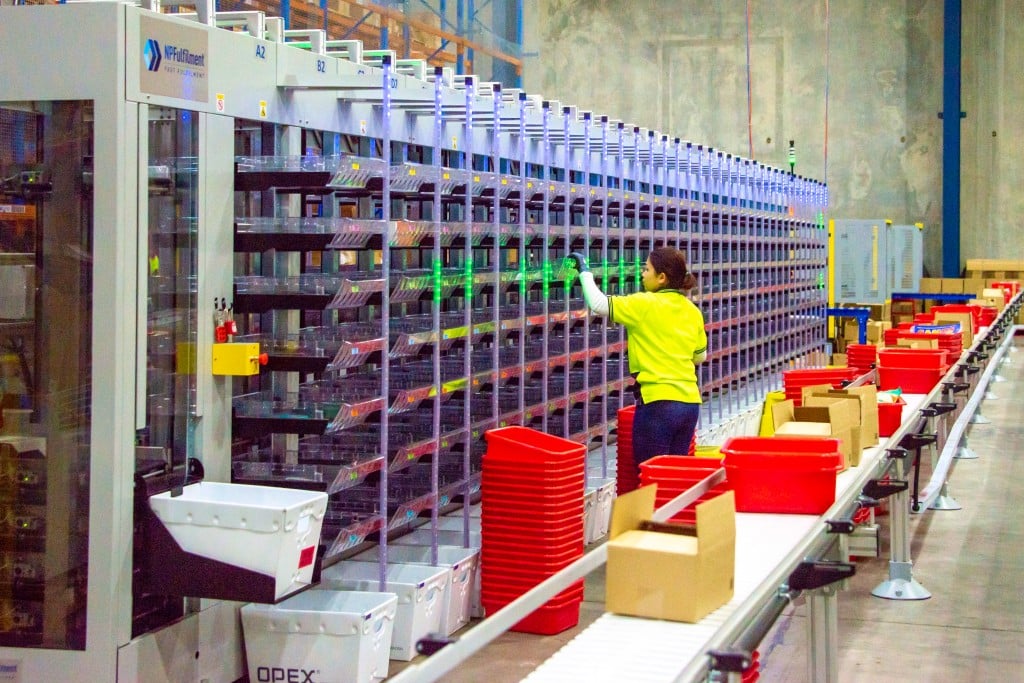
This is why pick and pack for high-SKU apparel needs tighter systems than a general warehouse process, usually built around barcode scanning at the point of pick rather than relying on staff memory.
Sharp Seasonal Demand Spikes
Fashion doesn’t move at a steady pace. A new season launch, a sale event or a viral product can push order volume up several times over in a matter of days.
A fulfilment partner built for steady, predictable volume struggles here. You need a warehouse that can flex labour and space up and down without your dispatch times blowing out.
The Highest Return Rate of Any Ecommerce Category
Fashion returns more than almost anything else sold online. According to the National Retail Federation’s 2025 Retail Returns Landscape report, the average ecommerce return rate sits at close to 19–20%. Apparel runs well above that, commonly cited in the 20–30% range, with some fashion segments reaching much higher.
A large share of it comes down to sizing, fit, and colour not matching expectations, plus “bracketing” (buying multiple sizes with the plan to return whatever doesn’t fit). A fulfilment process built for a low-return category simply won’t cope with that volume of reverse logistics.
Brand Presentation and Unboxing
For a lot of fashion brands, packaging is part of the product. Tissue paper, branded mailers, swing tags and inserts all shape how a customer feels about their order before they’ve even tried anything on. A generic pick-and-pack process that shoves items into a plain satchel undercuts a brand that’s invested in its unboxing experience.
Delicate and Variable Handling
Garments aren’t uniform. Knitwear needs to be folded, not crushed, and structured pieces need to hold their shape. Accessories and footwear often need their own packing approach entirely.
Staff who pick and pack fashion orders need training that’s specific to the category, rather than general warehouse experience alone.
The Fashion Fulfilment Process, Step by Step
Whether you ship ten orders a day or ten thousand, fashion and apparel ecommerce fulfilment usually runs through the same six stages.
- Receiving and quality control: Stock arrives from your supplier or manufacturer and gets checked against your purchase order. For fashion, this also means checking for damage, colour accuracy, and correct sizing labels before anything goes onto a shelf.
- Storage by SKU and variant: Stock gets located by exact SKU, not just by style. Good clothing warehouse storage means every size and colour combination has its own home, which is what makes fast, accurate picking possible later.
- Variant-accurate picking: When an order comes through, the correct SKU is picked and checked, usually with barcode scanning to catch mismatches before they become a customer’s problem.
- Branded packing: Orders are packed to your specifications, whether that’s a simple satchel or a fuller branded unboxing experience with tissue paper and inserts.
- Same-day dispatch: For most businesses, orders received by 6am are dispatched the same day. For a small number of high-volume clients, orders received up until 2pm can be shipped the same day.
- Returns processing: Returned items are received, inspected, and either restocked, marked down, or flagged for disposal, with your inventory count updated to reflect it.
Each stage depends on the one before it. Weak receiving checks lead to inventory errors down the line, and storage that isn’t organised by variant makes picking slower and more error-prone.
Get the early steps right, and the rest of the process runs a lot smoother.
Returns Management for Fashion Brands
Returns are a core part of the operation. Fit and sizing issues account for a large share of apparel returns, and plenty of shoppers order more than they intend to keep, planning to send back whatever doesn’t work. That’s normal buying behaviour in this category, so there’s no point trying to stamp it out.
What matters is how well your returns management process handles the volume.
Inspect, Grade, Restock
Every return should be checked on arrival.
- Is it in resaleable condition?
- Does it need steaming or re-tagging
- Is it damaged beyond resale?
Items that pass get restocked and made available for sale again quickly. The longer a returned item sits ungraded, the more sellable inventory sits idle instead of turning into revenue.
Exchanges, Not Just Refunds
A customer returning the wrong size isn’t necessarily a lost sale. If the exchange process is quick, plenty of them will simply swap sizes rather than asking for a refund. A returns process built to handle exchanges smoothly keeps more of that revenue in the business.
Protecting Inventory Accuracy
Every return needs to update your livestock count straight away. If your fulfilment partner isn’t updating inventory in real time, you risk overselling stock that’s actually sitting in a returns pile waiting to be processed.
Technology and Platform Integration
Fashion moves quickly, so your inventory visibility has to keep up. A fulfilment partner should give you real-time inventory visibility across every SKU and variant, rather than a stock count that’s a day or two out of date.
That visibility should extend to wherever you sell:
- Ecommerce platform integrations with Shopify, WooCommerce, and major marketplaces keep stock levels and order status in sync automatically, rather than relying on manual updates between systems.
- Inventory management by SKU gives you a clear picture of what’s actually on the shelf, broken down to the size and colour level. Batch and expiry control can also be added where required for an additional cost.
- Order-status transparency means you and your customer both know exactly where an order sits, from the moment it’s placed to the moment it’s delivered.
What Fashion 3PL Costs in Australia
Fashion 3PL costs in Australia are usually a little higher than for simpler product categories, and the SKU and returns complexity covered above is the reason why. Rather than one flat rate, most providers charge across a handful of components:
- Receiving fees: Covering the cost of unloading, checking, and booking stock into the warehouse, usually charged per carton or per hour.
- Storage fees: Based on pallet, bin, or cubic metre space. Clothing warehouse storage costs climb quickly for brands holding a lot of SKUs across sizes and colours, since more variants means more individual locations to store.
- Pick and pack fees: The cost of picking, packing, and preparing each order, typically the largest line item, and higher for multi-item orders.
- Returns handling: Inspecting, grading, and restocking returned items, which fashion brands lean on more heavily than most categories given return volumes.
- Packaging and kitting: Branded mailers, tissue paper, swing tags, or multi-item kits, if you want a more considered unboxing experience.
When you compare quotes for fashion fulfilment in Australia, the price differences almost always trace back to these five components rather than one provider simply being cheaper across the board.
As a general guide
Fulfilment for a brand shipping around 1,000 orders a month often lands somewhere in the thousands of dollars monthly once storage, receiving, and pick and pack fees are all counted. That figure moves around a fair bit depending on the provider, how complex your orders are, and how much packaging and kitting work is involved.
Fashion brands tend to sit toward the higher end of any 3PL’s pricing because of the returns volume and variant complexity involved, so it pays to ask exactly how a provider prices size and colour variants before you sign anything.
Rather than trying to compare rate cards from memory, the more reliable way to know what fashion fulfilment will cost your brand is to get a quote based on your actual order volume, SKU count, and average items per order.
How to Choose a Fashion Fulfilment Partner in Australia
Not every 3PL is set up to handle fashion, even if they can technically ship a box. Before committing to a provider, it’s worth checking for a few specifics.
A Track Record With Fashion Specifically
Ask how many fashion or apparel brands the provider currently works with, and how they handle SKU-heavy, high-return categories day to day. General fulfilment experience doesn’t automatically translate into fashion industry logistics experience.
Room to Scale for Peak Periods
Seasonal launches and sale events can multiply your order volume overnight. Your provider needs enough warehouse capacity and labour flexibility to handle that spike without your dispatch times slipping.
National and Trans-Tasman Reach
If you sell across Australia and New Zealand, or plan to, a provider with dedicated 3PL in Sydney and 3PL in Melbourne facilities, backed by broader 3PL warehousing across both countries, means faster delivery and lower shipping costs than routing every order from a single warehouse.
Genuine Returns Capability
Ask exactly how returns are handled: how fast items are inspected, graded and put back on the shelf, and how quickly your inventory count updates.
Technology and Integrations
Confirm the provider connects directly with your existing sales channels and gives you real-time order and inventory visibility, rather than daily or weekly reporting.
Relevant Certifications
Depending on your supply chain, it’s worth asking what quality or compliance certifications a provider holds, such as ISO accreditation, particularly if you’re shipping items like cosmetics or supplements alongside apparel.
Getting Fashion Logistics Right
Fashion isn’t a category you can bolt onto a generic 3PL process and expect good results.
High SKU counts, sharp seasonal spikes, return rates well above other categories, and customers who notice their unboxing all mean fashion needs a fulfilment partner built around how clothing moves.
Get the fundamentals right: accurate variant picking, fast dispatch, a returns process that keeps pace and real-time visibility across every channel you sell on, and fulfilment stops being a source of lost sales and becomes one of the things your customers never have to think about.
Ready to see what fashion logistics tailored to your brand actually looks like? Request a fulfilment quote and see your likely cost, capacity and timelines based on your real order volume.