

Pick and pack is the two-step process behind every order you ship. Picking means locating and retrieving items from storage against a specific customer order, and packing means packaging, labelling, and preparing that order for dispatch. Together, they turn a stored item into a delivered order.
The Pick-and-Pack Process, Step by Step
Every order moves through four stages once it reaches the warehouse, whether it’s a single item or a bulk shipment.
1. Receive
Stock arrives at the warehouse and is checked against supplier paperwork before it’s shelved and logged into the warehouse management system. This step confirms quantities and condition match what was ordered, so every pick later on starts from a correct inventory count.
2. Pick
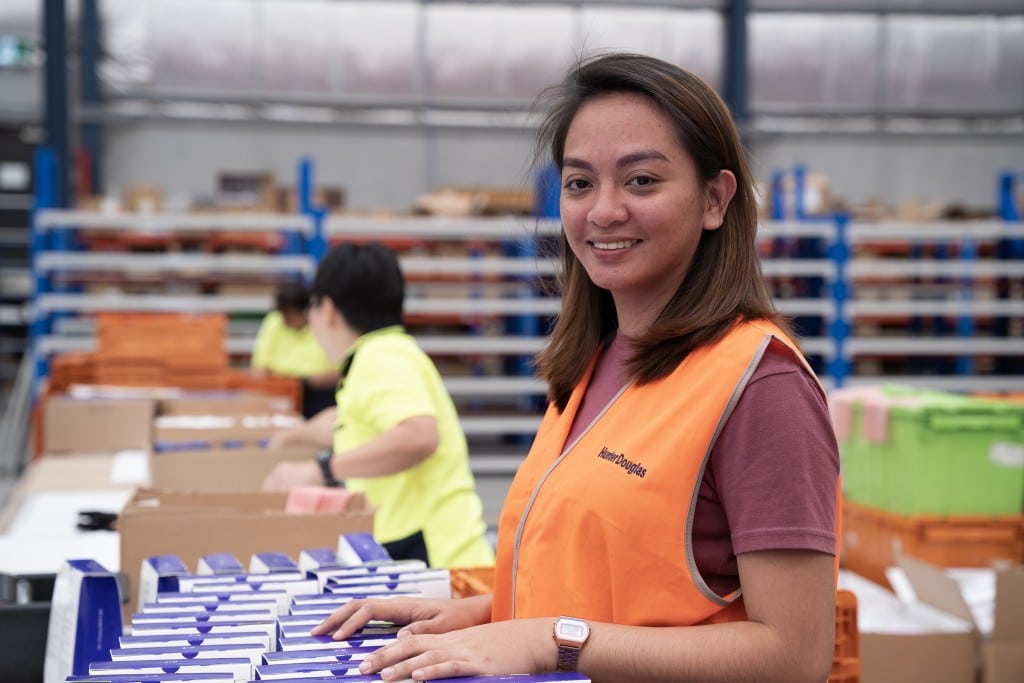
Once a customer order comes through, a picker retrieves the exact items and quantities needed. Most pick-and-pack systems guide this step with a picking list, a handheld scanner, or a pick-to-light system that directly points to the right shelf location. Accuracy matters most here, as a wrong item picked at this stage becomes a wrong item shipped, and the cost of fixing that mistake is far higher than the cost of preventing it. Not to mention the cost of reputation and customer loyalty.
3. Pack
Picked items are checked against the order, packaged to suit the product (fragile, oversized, or multi-item orders each need different handling), and labelled with the correct address and tracking details. Branded packaging, inserts, or kitting can be added at this stage too, if the order calls for it.
4. Ship
The packed order is handed to a carrier, a shipping label and tracking number are generated, and the customer gets a dispatch notification. From here, tracking data flows back to both the retailer and the customer, so everyone can see exactly where the order is.
Getting these four steps right, consistently and at volume, is what separates reliable pick-and-pack fulfilment from an operation that causes errors and delays. Providers offering pick-and-pack services build technology and staff training around each step individually, rather than treating picking and packing as one informal task.
Why is It Important?
- Efficiency: A structured pick-and-pack process reduces order fulfilment time and improves overall warehouse productivity. Fewer wasted steps between shelf and shipment mean more orders processed in the same working day.
- Accuracy: Good pick-and-pack systems minimise errors in picking and packing, which leads to fewer returns, fewer customer complaints, and less time spent fixing mistakes after the fact.
- Scalability: A well-run process handles fluctuations in order volume effectively, whether that’s a slow week or a peak sales event, without needing to rebuild the whole operation every time volume shifts.
- Cost Reduction: Optimising labour and resource use, reducing operational costs per order, as staff spend less time walking, searching and correcting errors.
Key Technologies Used in Pick and Pack
Pick-and-pack technology is a crucial part of modern warehouse management and order fulfilment. It streamlines the process of getting products off the shelf and into a customer’s hands. It’s what separates a fast, accurate operation from a slow, error-prone one.
Here’s a breakdown of the key technologies involved:
- Warehouse Management Systems (WMS): Software that manages inventory, tracks orders, and guides picking and packing processes from receiving through to dispatch.
- Barcode Scanners and RFID: Used for quick and accurate item identification and tracking at every stage of the pick-and-pack fulfilment process.
- Pick-to-Light Systems: Lights guide workers to the exact locations of items to be picked, cutting down search time and reducing picking errors.
- Voice Picking: Workers receive instructions through headsets, freeing their hands for picking.
- Automated Guided Vehicles (AGVs) and Robots: Transport items around the warehouse and assist in picking and packing tasks, particularly in high-volume operations.
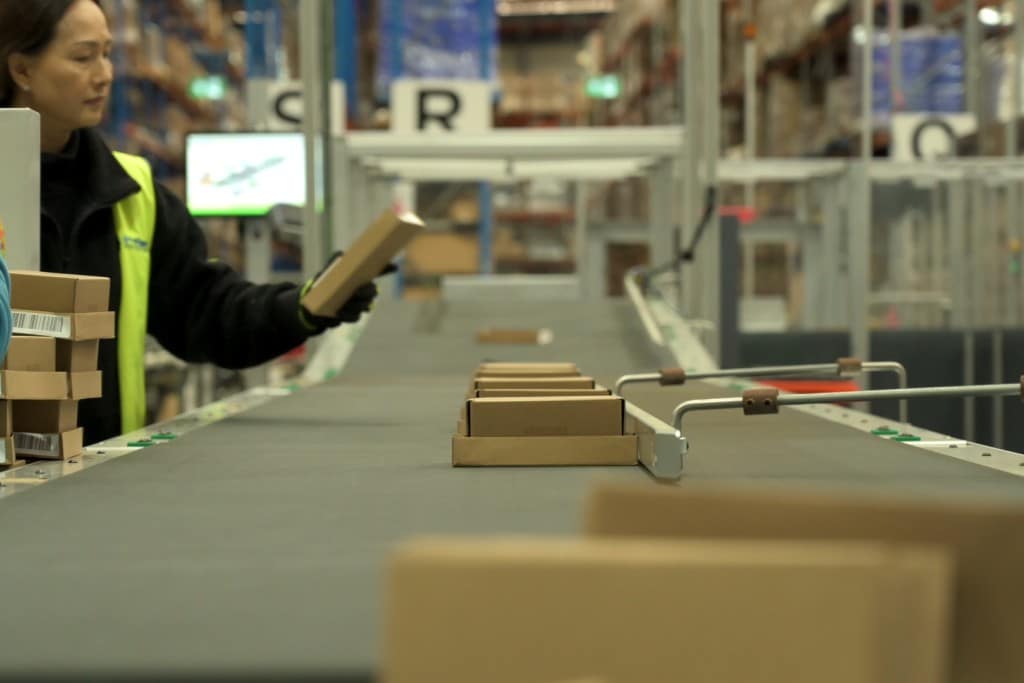
- Conveyor Systems: Move items efficiently between picking, packing, and dispatch areas without manual carrying.
Different Pick-and-Pack Methods
- Piece Picking: Picking items one at a time for individual orders. It’s simple to set up and easy for new staff to learn, but it doesn’t scale well once order volume climbs, since each order is handled from scratch.
- Batch Picking: Picking multiple orders simultaneously, grouping items across several orders into one trip through the warehouse. This significantly reduces walking time, though it requires a sorting step afterwards to separate items back into individual orders.
- Zone Picking: Assigning pickers to specific zones in the warehouse, so each picker only ever works one area. This speeds up picking in large facilities, but an order spanning multiple zones must be handed off between pickers, adding a coordination step.
- Wave Picking: Coordinating picking based on order priority and shipping deadlines, releasing batches of orders in timed waves rather than one at a time. It’s well suited to hitting same-day cut-offs, though it takes a more advanced pick-and-pack system to plan and manage the waves properly.
Most high-volume operations end up combining several of these methods rather than relying on just one, matching the method to the order type rather than forcing every order through the same process.
Benefits of Using Pick-and-Pack Technology:
Bringing the right technology into a pick-and-pack fulfilment operation pays off in a few concrete ways.
- Improved Order Accuracy: Scanning and guided picking catch mistakes before they leave the warehouse, rather than after a customer complains and a return has to be processed.
- Increased Productivity: Staff spend more time picking and less time searching, so more orders move through the same shift without adding headcount.
- Reduced Labour Costs: Fewer wasted steps and fewer errors to fix mean less labour spent per order, even as order volume grows.
- Faster Order Fulfilment: Orders move from pick to pack to dispatch with fewer holdups in between, so customers get their parcel sooner.
- Better Inventory Management: Every step is scanned and logged in real time, so stock counts stay accurate instead of relying on periodic manual checks.
- Enhanced Customer Satisfaction: Accurate, on-time orders mean fewer complaints and more repeat purchases, since customers consistently get what they ordered, when they expected it.
Put together, that’s what turns pick and pack from a back-of-house task into a real driver of customer satisfaction and repeat business.
Want pick and pack handled for you without hiring, training or managing a warehouse team yourself? Our pick-and-pack services run on the same scan-verified process covered above, with 99.9% order accuracy behind every pick.
FAQs
What is a picking list?
A picking list is the document, or more often the digital instruction, that tells a warehouse worker exactly what to retrieve for an order: the item, the quantity, and its storage location. Modern pick-and-pack systems generate this automatically the moment an order comes in without relying on a printed sheet.
What is warehouse packing?
Warehouse packing is the stage after picking, where retrieved items are checked, boxed or bagged as needed, labelled with shipping details, and prepared for carrier collection. It includes choosing the right packaging for fragile or oversized items and adding any branded materials, inserts, or kitting the order requires.
How can picking and packing errors be reduced?
Most errors come from manual steps that skip verification, so the fix is to build a scan or check into every stage. Barcode scanning at the pick stage confirms the right item was grabbed, while a second check at packing catches quantity or item mismatches before the box is sealed. Plus, a 3PL warehousing partner running a proper WMS can track error rates by staff member or SKU to catch patterns before they become routine.
What’s the difference between piece, batch, zone, and wave picking?
- Piece picking handles one order at a time from start to finish.
- Batch picking groups multiple orders into a single pass through the warehouse.
- Zone picking assigns pickers to fixed areas rather than whole orders.
- Wave picking releases groups of orders together based on priority or shipping deadlines.
Most operations use a mix, depending on order volume and how tight the shipping cut-off is.
Is pick and pack only for e-commerce?
No. While online stores are the most common users of pick-and-pack fulfilment, the same process applies to wholesale and B2B orders, subscription boxes and retail replenishment. Any business sending physical products to a customer or another business relies on some form of picking and packing, and a good product fulfilment partner will run the same accuracy standard across all of them.
Do I need a 3PL to handle pick and pack, or can I do it in-house?
Either can work, and it usually comes down to volume. In-house pick and pack is manageable at low order volumes with simple products, but it becomes harder to maintain accuracy and speed as order volumes grow. If you’re weighing outsourcing, our guide on how to choose a 3PL provider walks through what to look for.